
Day Four - Chasing the Sun to the Top of Britain
I was up early to catch the sunrise over the Moray Firth, and what a sunrise it was. As the sun rose, it shimmered across the water, picking out every ripple and line of the tide. I made my way down to the harbour, a small one at the mouth of the River Helmsdale. It was built in 1818 to make the most of the herring boom, and in the 1800s Helmsdale became one of the biggest herring ports in Scotland, with up to 200 boats crammed into the harbour. A few fishing boats are still based here today, and it still has the feel of a working harbour.

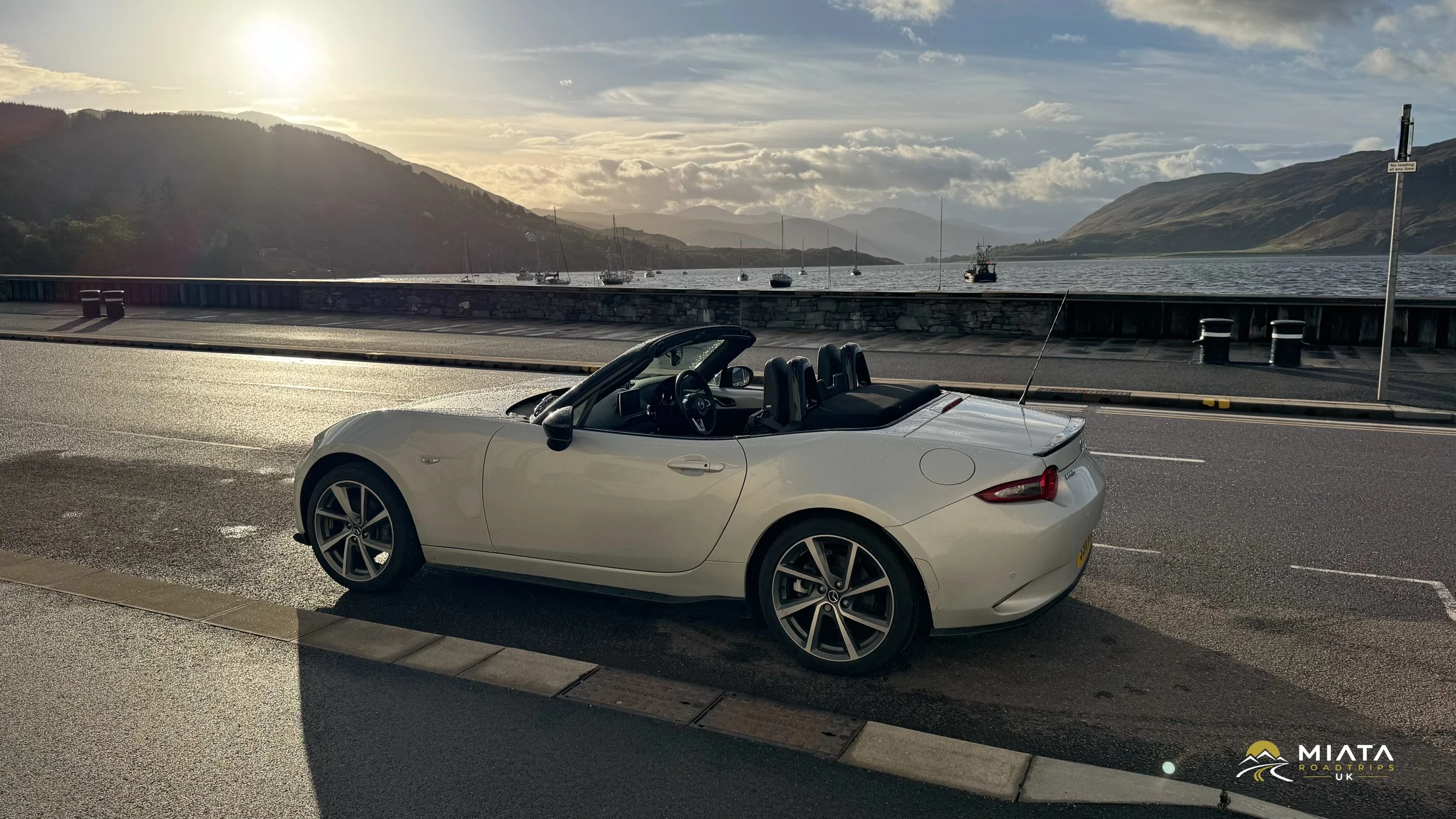
Sunrise over the harbour wall at Helmsdale
It was as quiet as a church before the service, with just a local out walking his dog, a sheepdog who was very curious about my camera tripod. After a while he found the courage to come over and say hello, and I gave him lots of fuss. They're such lovely animals, so trusting and happy. I captured some gorgeous drone shots from the harbour wall. It's another one of those moments that just hits you.
I left Helmsdale around 9 o'clock with the sun still low over the sea. From here the A9 runs north up the east coast of Caithness, with the North Sea on your right the whole way. The sun sparkled off the water like scattered glitter, and with the roof down and the road to myself, there's nothing quite like it. This is the best time of day to drive this stretch of the NC500.

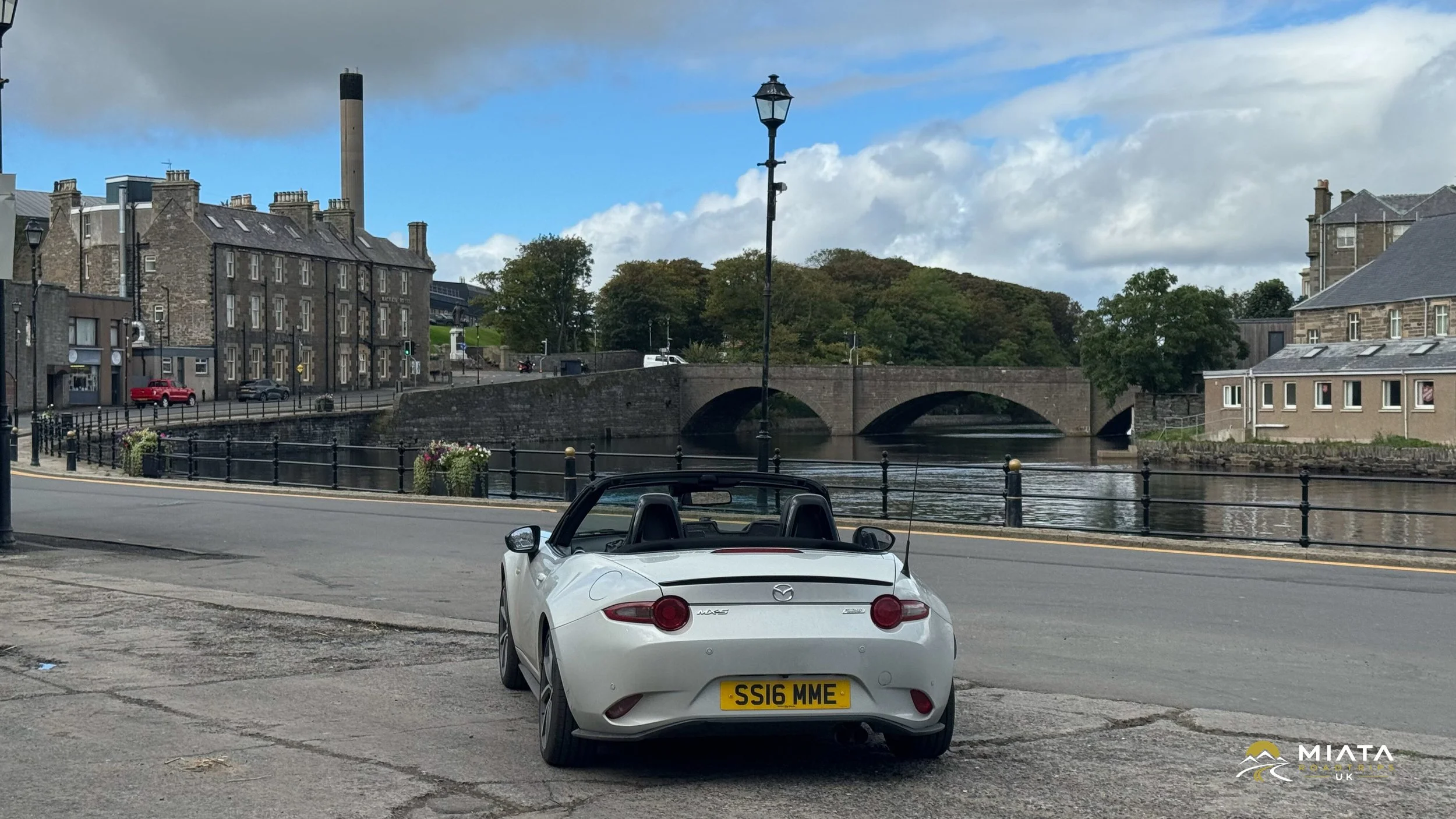
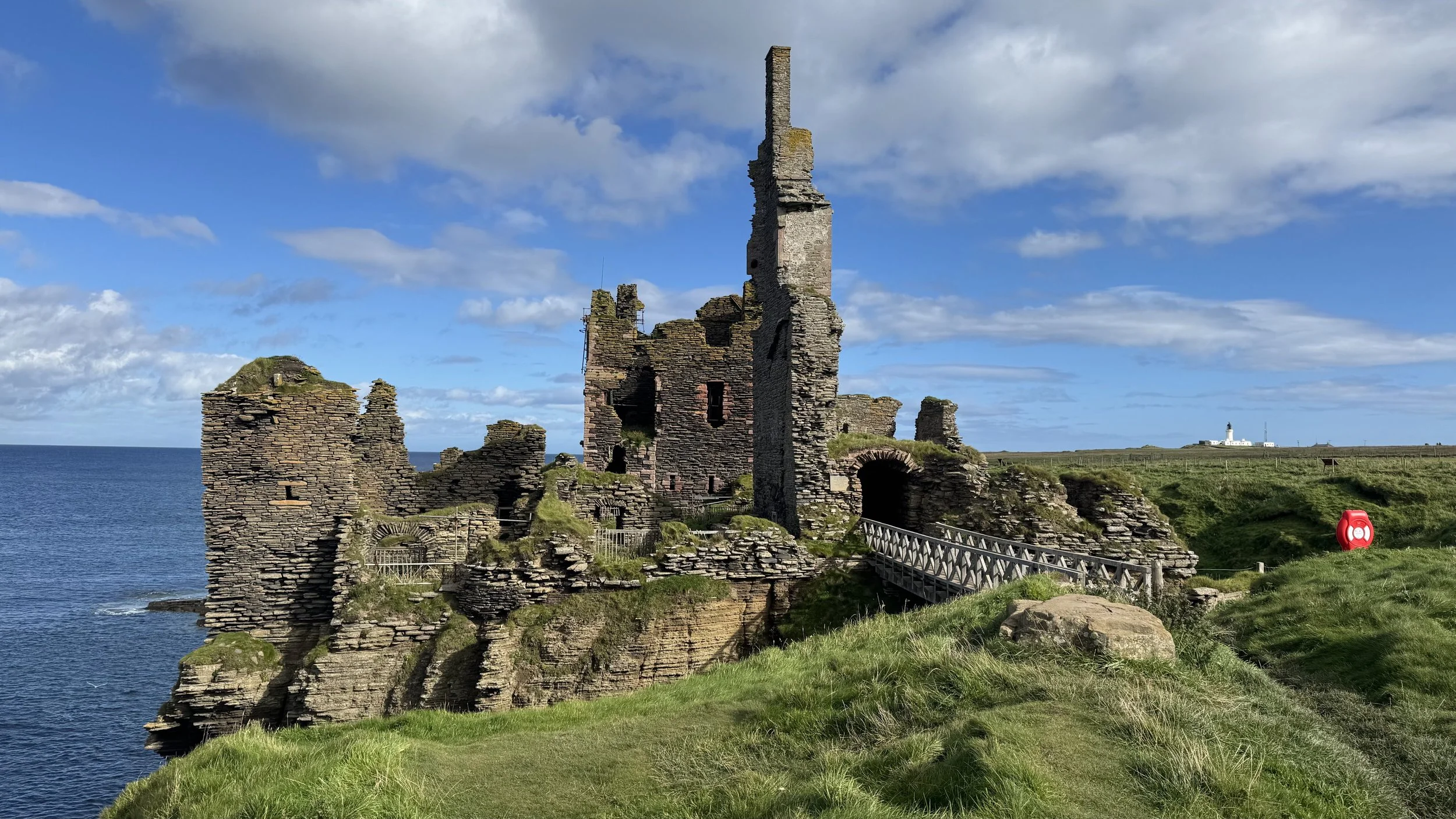
A few miles north of Helmsdale, I passed the turning for Badbea, an old clearance village where families moved off the nearby glens were resettled on the cliff tops in the late 1700s and 1800s. The ruins are now a memorial to the Highland Clearances, reached by a short walk from a lay-by on the A9. I drove past this time, but if you have time on a calm day, it's worth a stop.
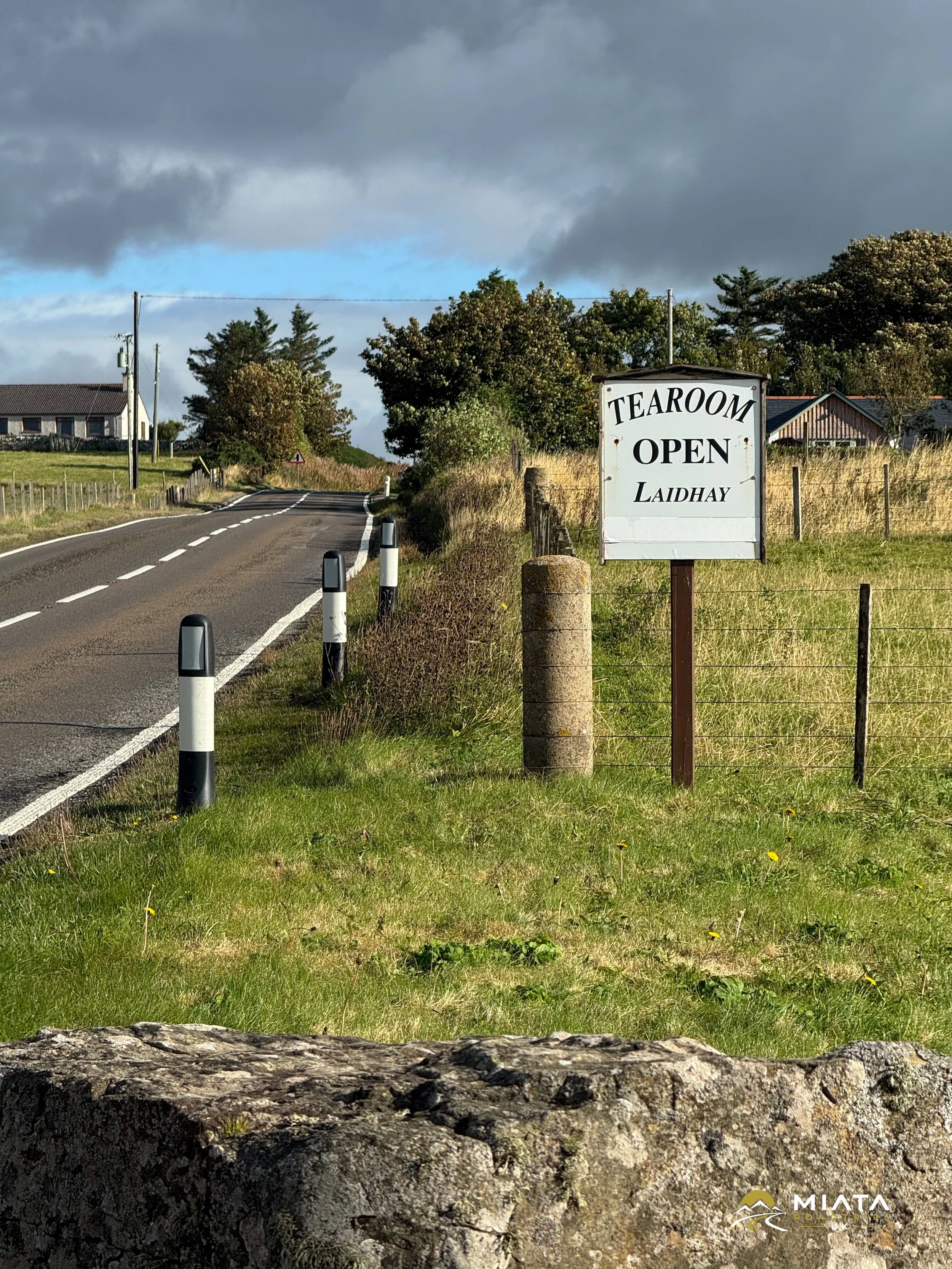
About half an hour up the coast, I stopped for breakfast at Laidhay Tea Rooms, a traditional croft tearoom just north of Dunbeath. I was the first one there, and it was wonderful. A true Scottish breakfast, and a generous one.
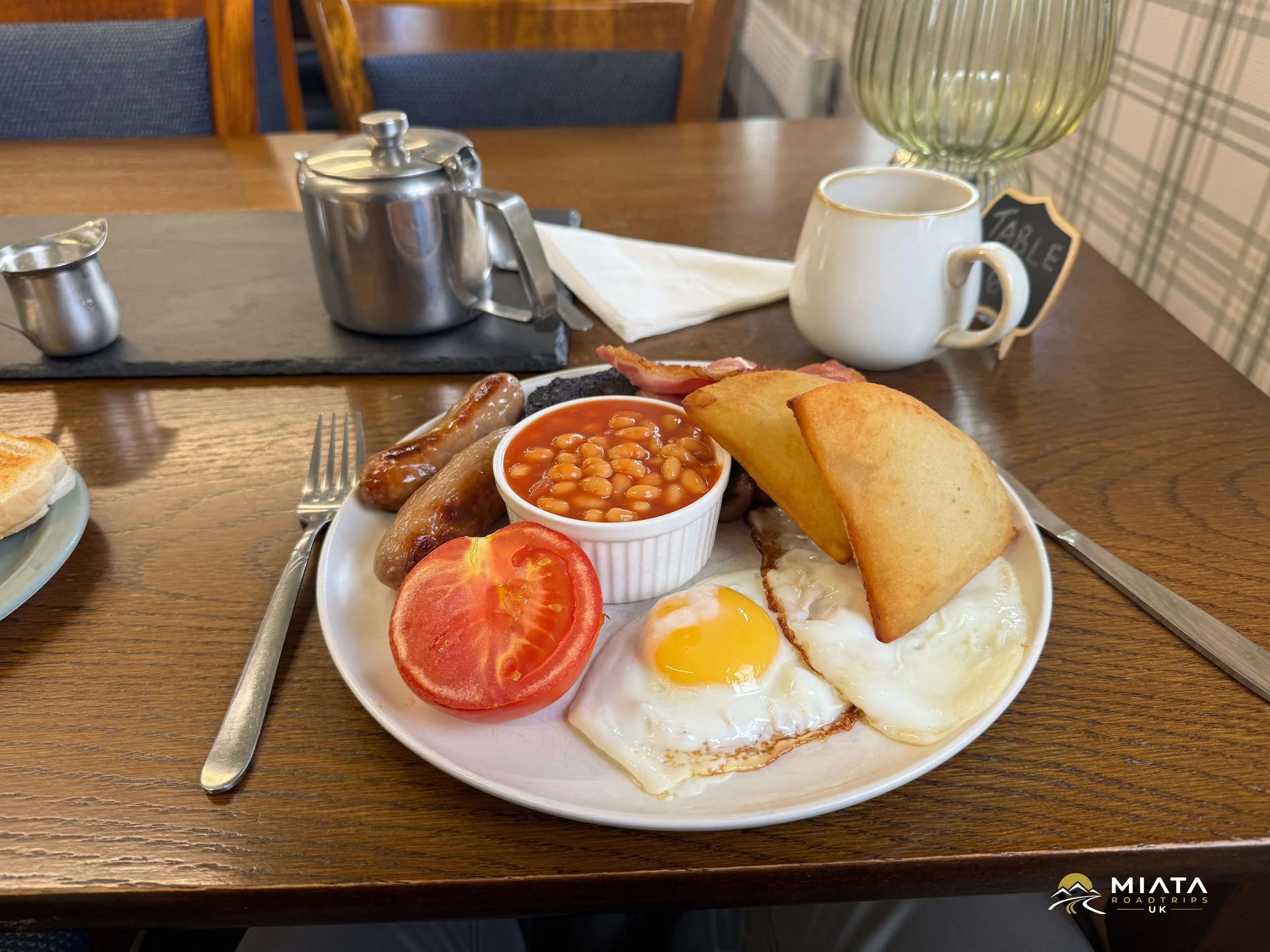
Laidhay Tearooms Scottish Breakfast
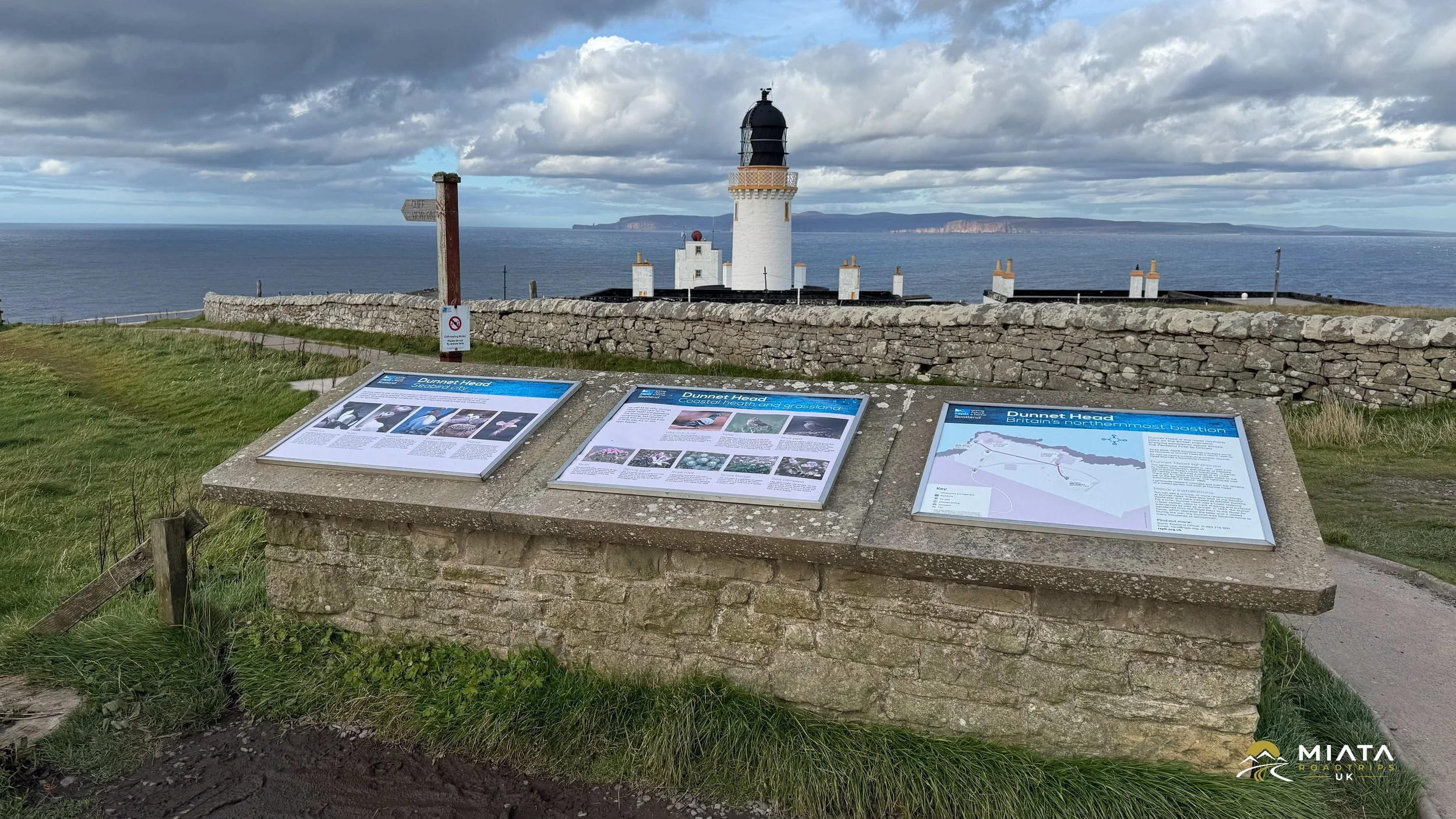
Once I'd eaten, I headed on north to Wick, the main town on this stretch of coast, and stocked up on supplies at the supermarket. From there it was on to John o' Groats, at the very north-eastern tip of mainland Britain. I did a quick photo shoot and sent postcards home to the girls. From here, the NC500 swings west and runs along the top of Scotland. A short way along is Dunnet Head, the most northerly point of the mainland, where the cliffs drop away to the Pentland Firth and Orkney sits on the horizon. I got some brilliant drone footage of the road leading up to the headland. Dunnet Head is an RSPB nature reserve, home to puffins and other seabirds in summer, so the drone stayed in the boot.



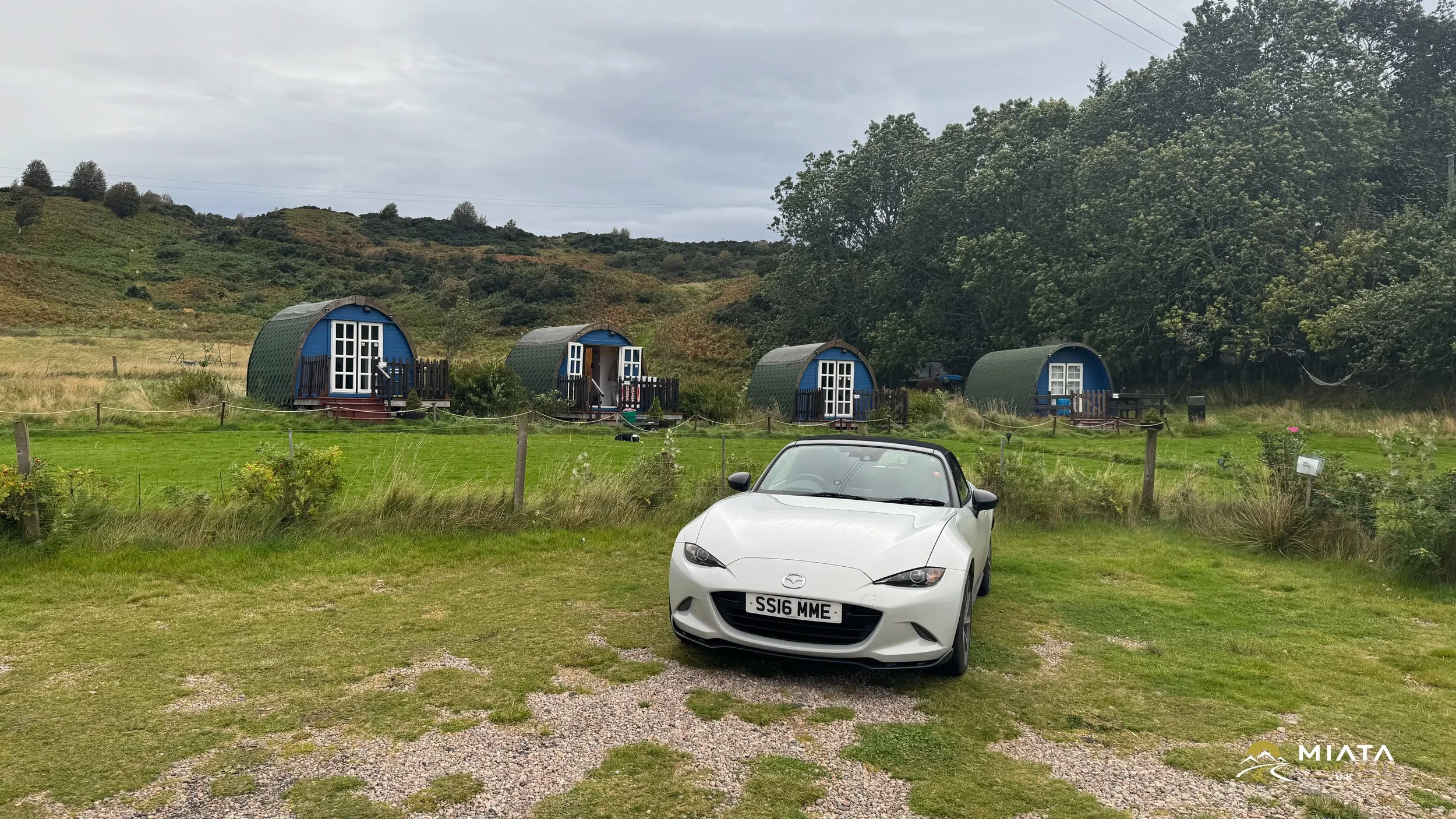
From Dunnet Head, I carried on west along the north coast, past Thurso, the most northerly town on the British mainland, to Melvich, a small village at the mouth of the Halladale River. There I turned south, leaving the coast behind and heading inland down Strath Halladale, a long, quiet valley that runs deep into Sutherland. My stop for the night was Wee Hoose Glamping at Kinbrace, a tiny hamlet in the heart of the Flow Country, surrounded by miles of open moorland. The pod was warm and snug. I met Kevin, the owner, who's a really nice guy. He moved up from London eight years ago with his wife, who's local, as they both wanted to come back. Now they've got this lovely little business, and I have to say it was the best night's sleep I've had.
Day Five - The Land That Time Forgot
The bed in the pod was so comfortable that I slept right through my alarm. The fridge had been stocked with everything for a full Scottish breakfast to cook yourself, which would have been a treat, but with a 10 o'clock checkout I'd run out of time. When I bumped into Kevin, he kindly said I was welcome to stay on and cook it. Any other day I'd have taken him up on it, but the road was calling. A few bits from my supplies in the car would keep me going, and off I went.
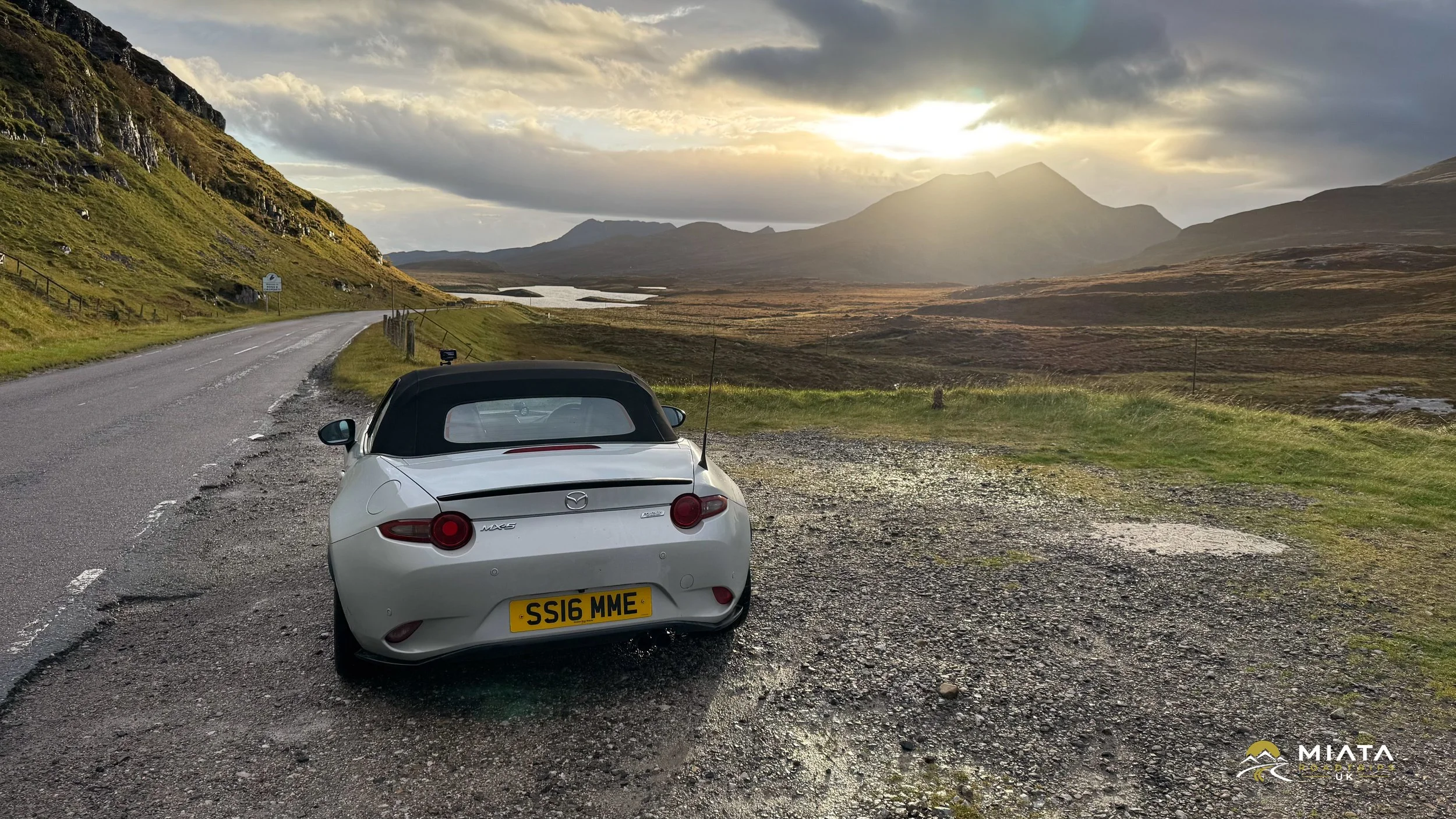
Sun appearing through the clouds
On Kevin's recommendation, I took the scenic route from Kinbrace, heading west and then north through the mountains, past a couple of lochs, to rejoin the NC500 at Tongue on the north coast. The cloud hung low and the rain swept across the mountainsides, and it was absolutely spectacular. The landscape was remote, almost eerie, and I was a tiny speck in the middle of it all. It was just me, a little two-seater and a suitcase of bare essentials in the boot, winding through the glens like an explorer in a land nobody had mapped, and it felt like a proper adventure.
Tongue is a small village sitting beside the Kyle of Tongue, a wide sea loch with Ben Loyal rising behind it. Kevin had also recommended the bakery there, and it was so popular it was full. So I tried the hostel, campsite and café just down the road, before the causeway. A toastie and a cup of tea in front of a roaring open fire was very welcome on a day like today.
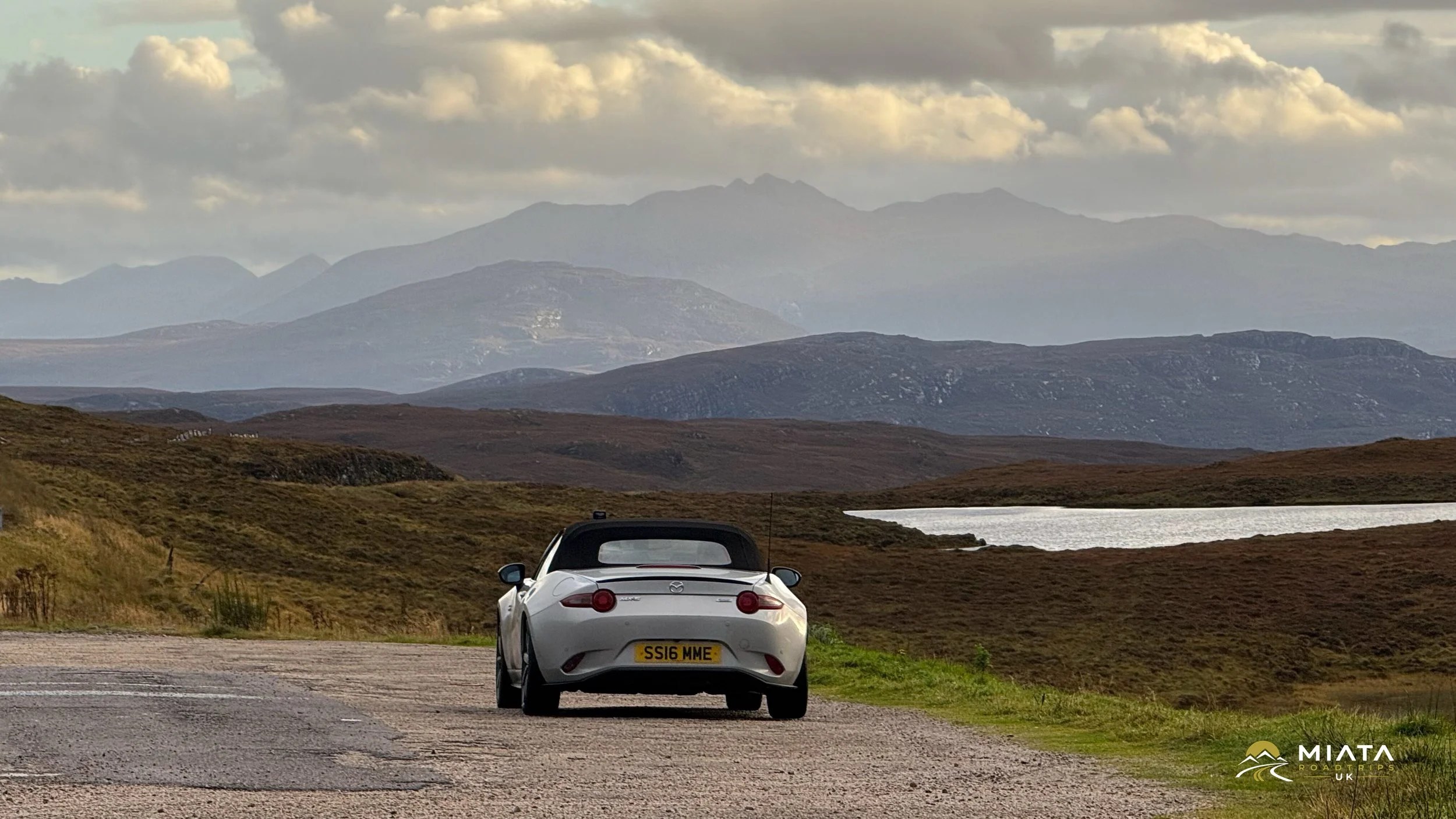

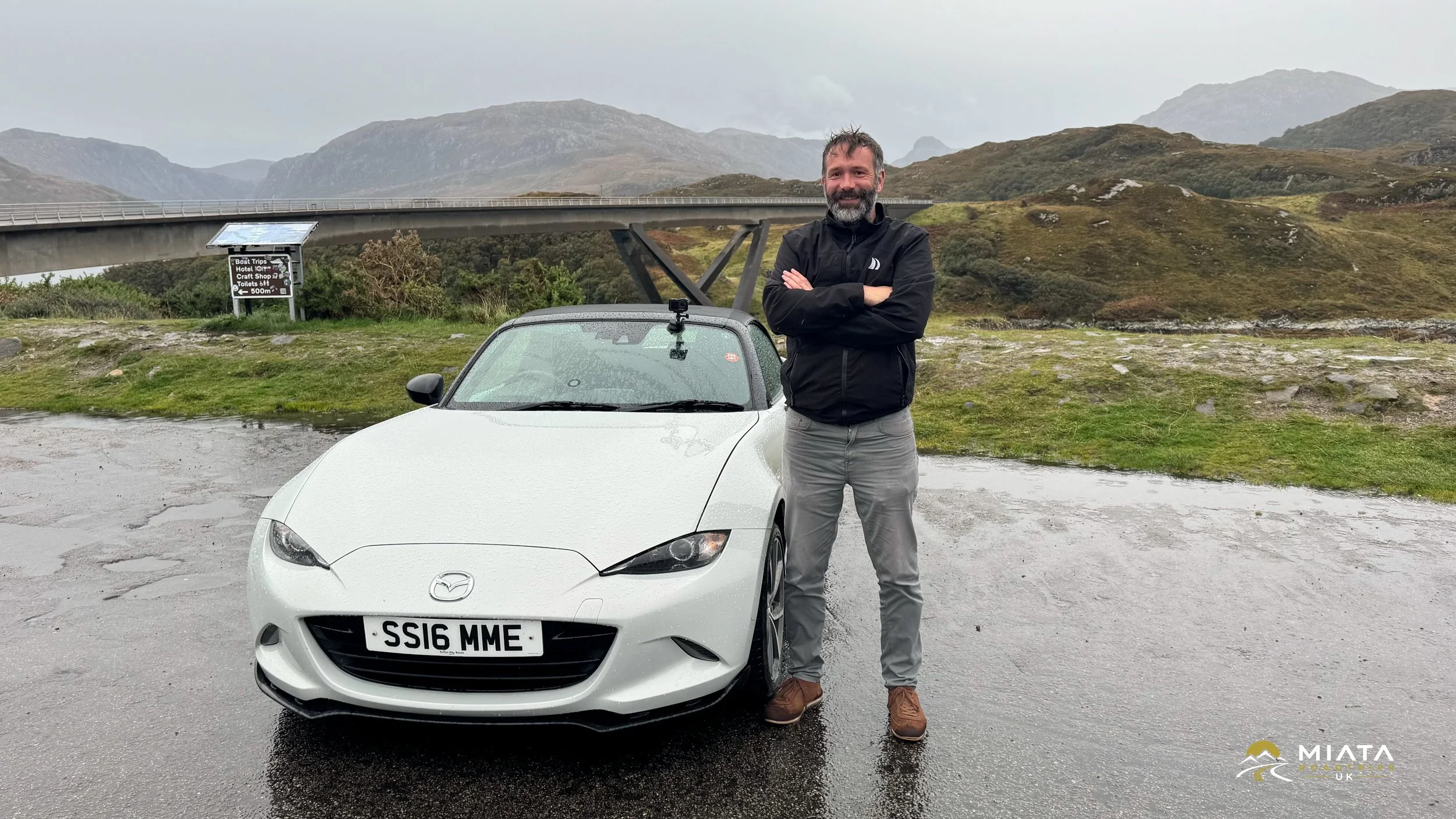
Over the causeway, on the left, there's a car park with a viewpoint looking back across the Kyle. Take it slowly though, as the surface is uneven and it's easy to bottom out in an MX-5. From Tongue, the road continues west along the top of Scotland to Durness, the last village before the north-west corner. Here I stopped at Smoo Cave, a huge sea cave carved into the limestone cliffs, and got well and truly soaked. I dried off at Cocoa Mountain, a chocolate maker just outside the village at Balnakeil. They say their hot chocolate is the best, and I have to agree. It's the best I've ever had.
Just past Durness, the NC500 turns the corner and heads south down the west side of the Highlands on single-track roads. It was well and truly wet, but that brings its own rewards. The sun broke through and lit up the valleys like spotlights on a stage, and I managed to take some photographs I'm really pleased with. With weather like this, there are waterfalls everywhere you look. It's a sight to behold and a privilege to experience.
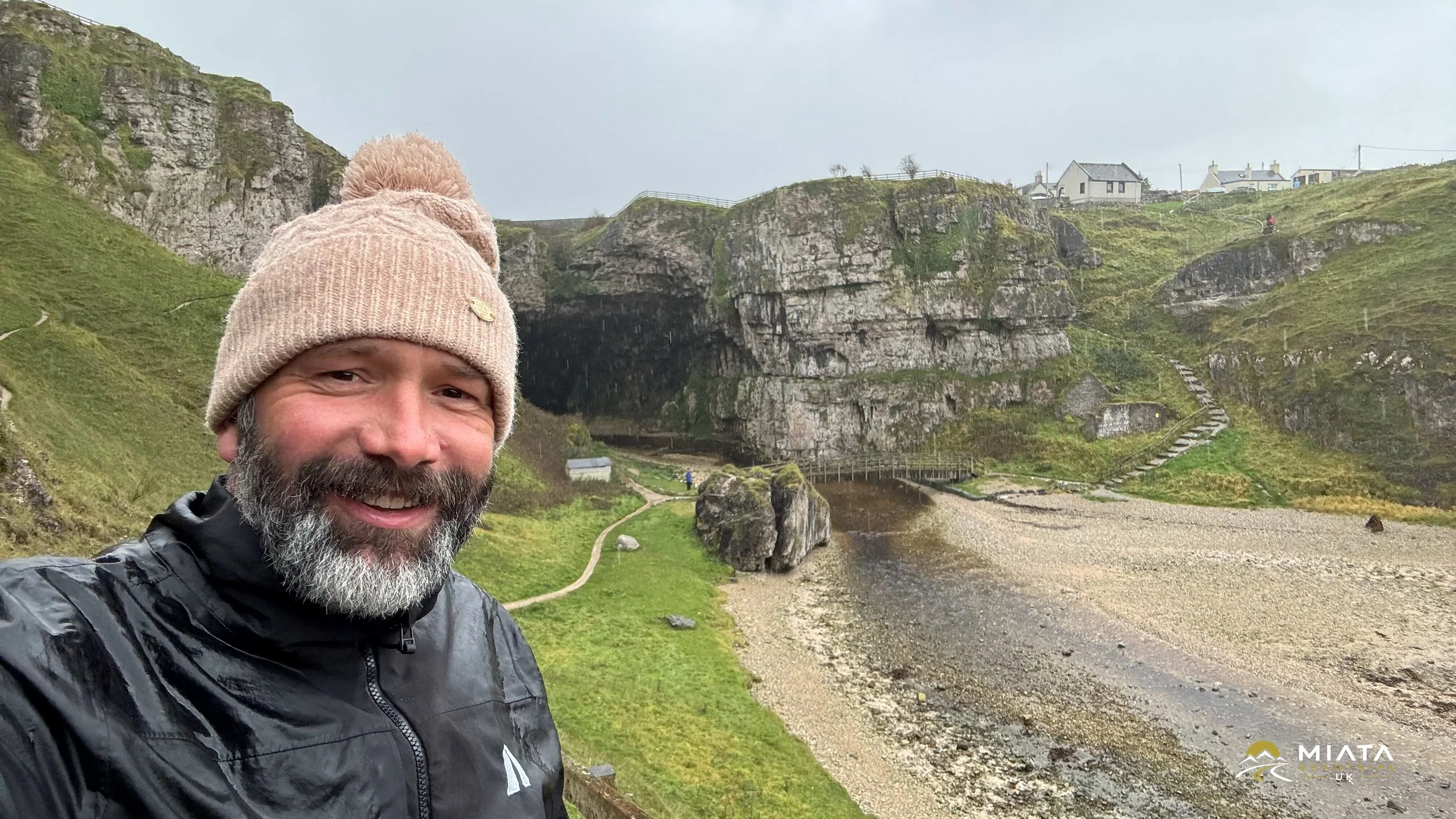


Further south, I crossed the Kylesku Bridge, a graceful curved bridge over Loch a' Chàirn Bhàin, and followed the coast south to Ullapool, a bustling fishing port on the shores of Loch Broom. I'd planned to drive on another hour after dinner to a boathouse beyond Braemore Junction, but I decided to stay put and booked a room above the Ferry Boat Inn, a cosy inn right on the harbour front. I was able to park right outside on the roadside, which was really handy. Dinner was fish and chips, and they were amazing, washed down with a pint of local beer. The inn looks out over Ullapool harbour, and the setting is magical.
Day Six - The Road That Climbs to the Sky
A relatively early start, and by 8:30 I was heading for Applecross, a day's drive south down the west coast. There were patches of blue sky, and the low morning sun gave everything a dramatic edge. That's the thing about driving south at this time of day. The lochs and mountains to your right catch the light, a world away from the same road in the afternoon. Plenty of cloud was hanging about too, so I had my fingers crossed for the Bealach na Bà later on.
About 20 minutes out of Ullapool, the tyre pressure warning light came on. Rather than push on into a more remote stretch, I turned back, as I knew the Jet garage in town had an air machine. Two tyres were just 2 psi down, so I topped them up, reset the sensor and away we went. A handy reminder to check your pressures before the emptier roads.
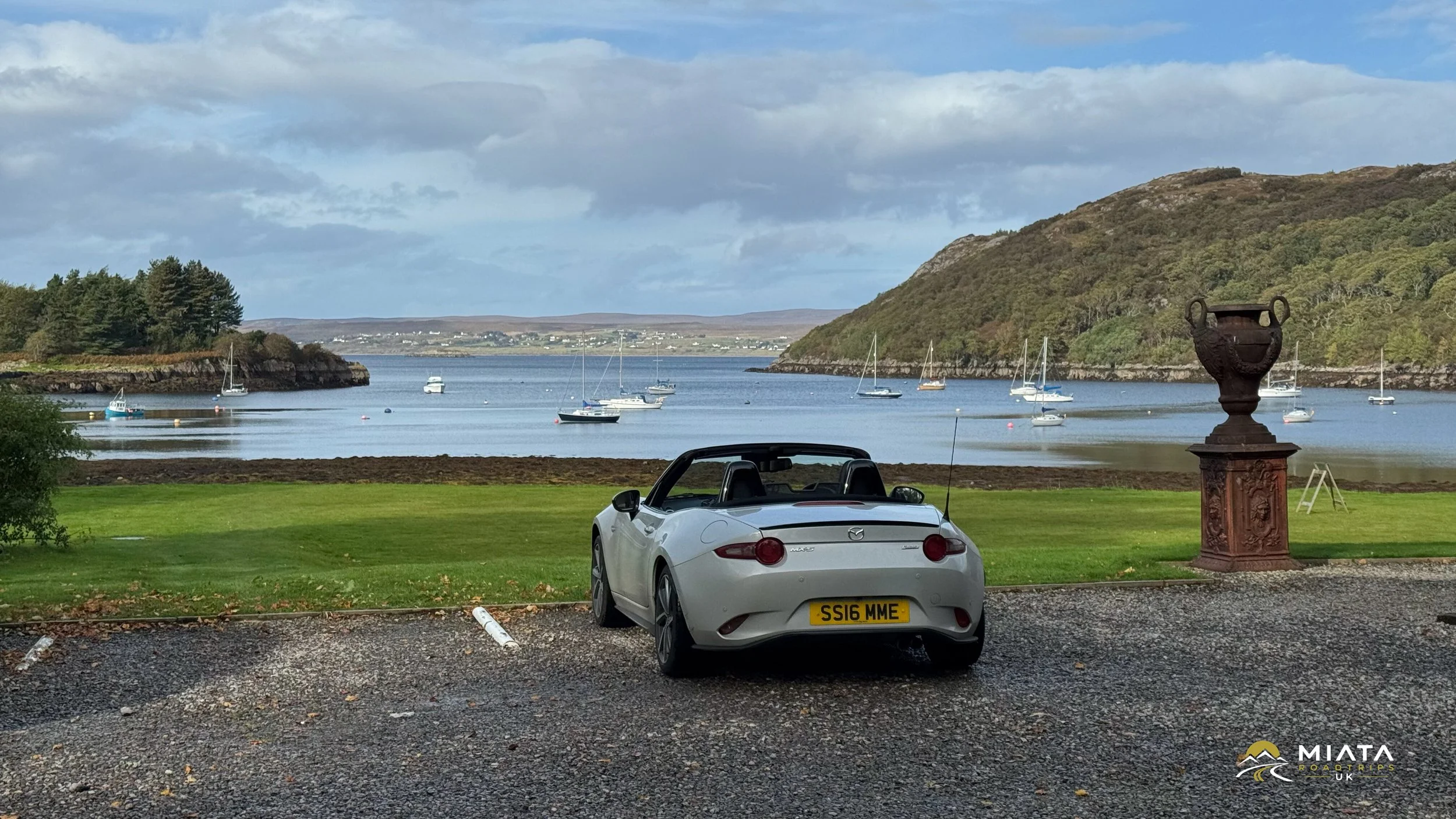
View from an old hunting lodge at Loch Shieldaig
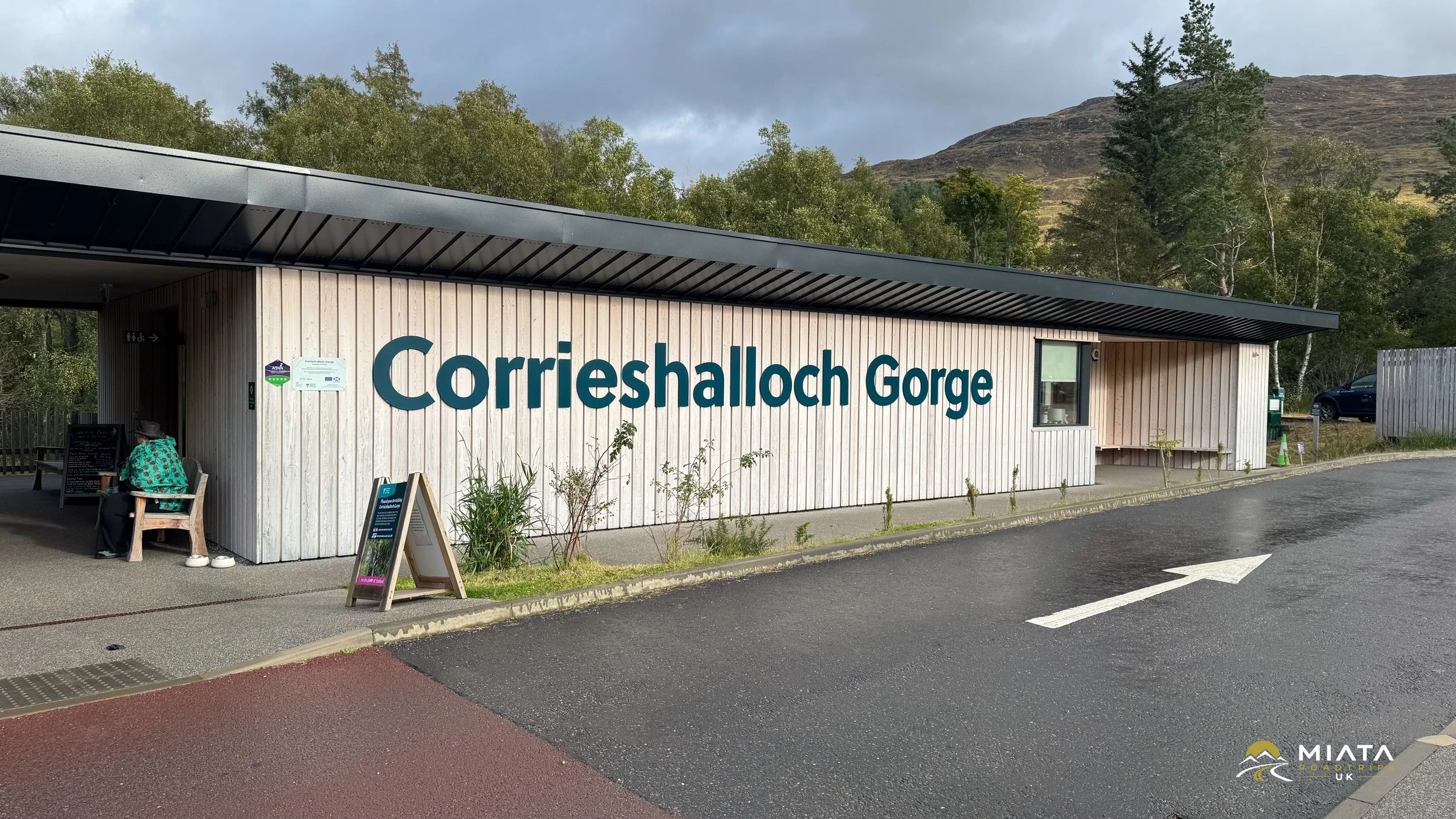
Heading back out, I stopped at Corrieshalloch Gorge, a deep, narrow slot in the rock at Braemore Junction, about 12 miles south of Ullapool, where the road to Gairloch branches off west. The easy path takes around 25 minutes, passing a string of smaller waterfalls on the way. About two-thirds of the way along, a suspension bridge carries you right over the main falls. It's limited to six people at a time, and with good reason, as it sways like a rope ladder under your feet. Further on, the viewpoint looks back up the gorge to the main waterfall. The walls are so sheer and close together, it's like peering into a crack in the earth. This being late September, it was fairly quiet, though the main car park was still filling up. Whatever time of year you visit, get there early so you're not left circling for a space. Allow 90 minutes, take your time, have a coffee and then carry on.
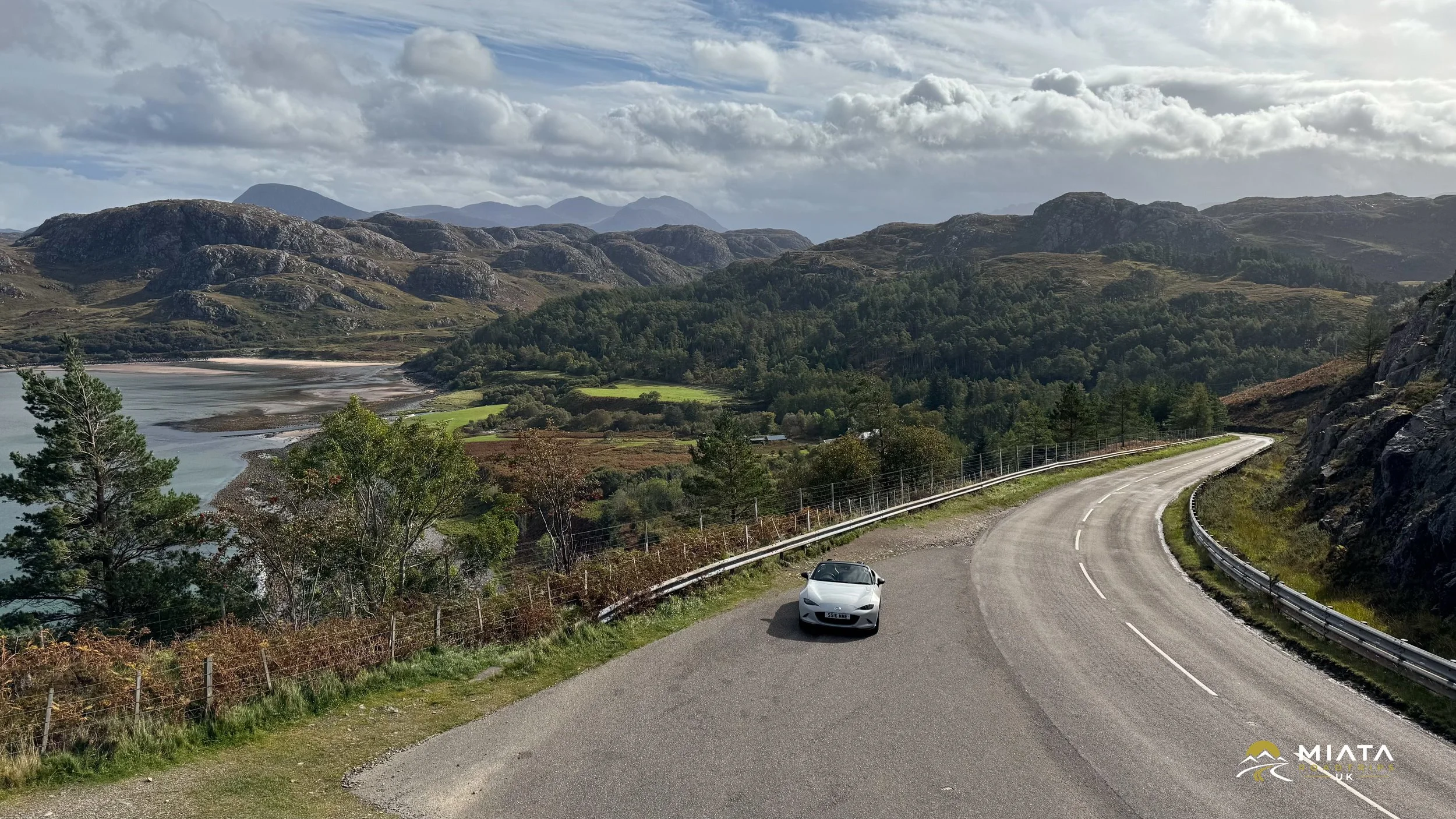
From Braemore, the road heads west back towards the coast, and what a drive this part of the NC500 is. It's like something out of The Land That Time Forgot, and I was half expecting dinosaurs around the next bend. Out came the drone to capture the scenery from above.
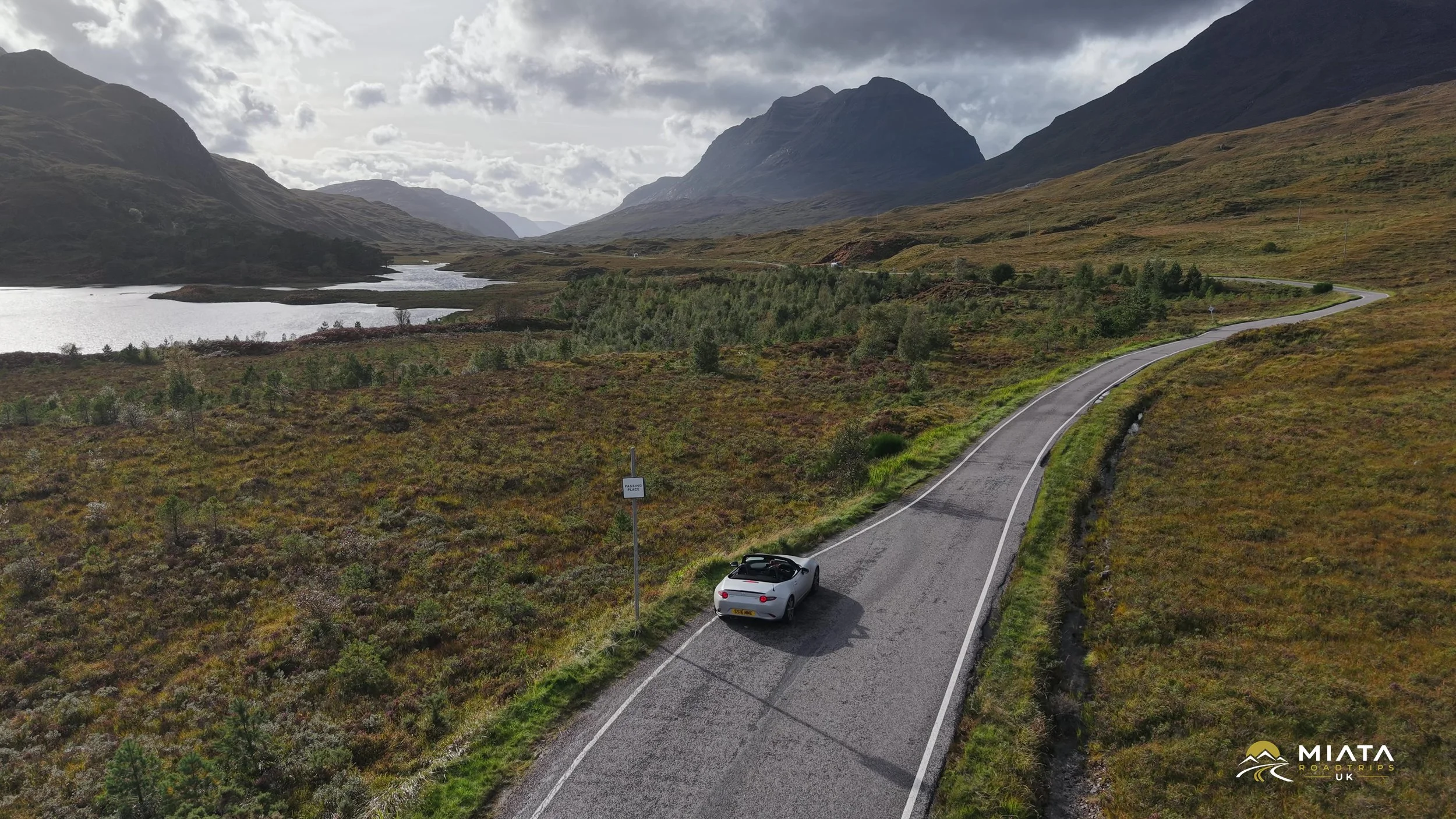
The land that time forgot…
Lunch was at the café at Inverewe Gardens, near the village of Poolewe on the shores of Loch Ewe. The gardens are known for plants from all over the world, which thrive this far north thanks to the warm Gulf Stream. The staff were so friendly and even treated me to a slice of cake on the house, which was a kind touch.
A little further down the coast, just south of Gairloch, is Shieldaig Lodge, a Victorian hunting lodge on Loch Shieldaig. The sun had come out and was glinting off the water, with a lone boat sitting at anchor. The whole scene was like a painting. It's a well-known spot for wildlife, with seals hauling out on the rocks and herons standing motionless in the shallows. I got chatting to Ian there, and we agreed it's one of the finest spots on the coast.
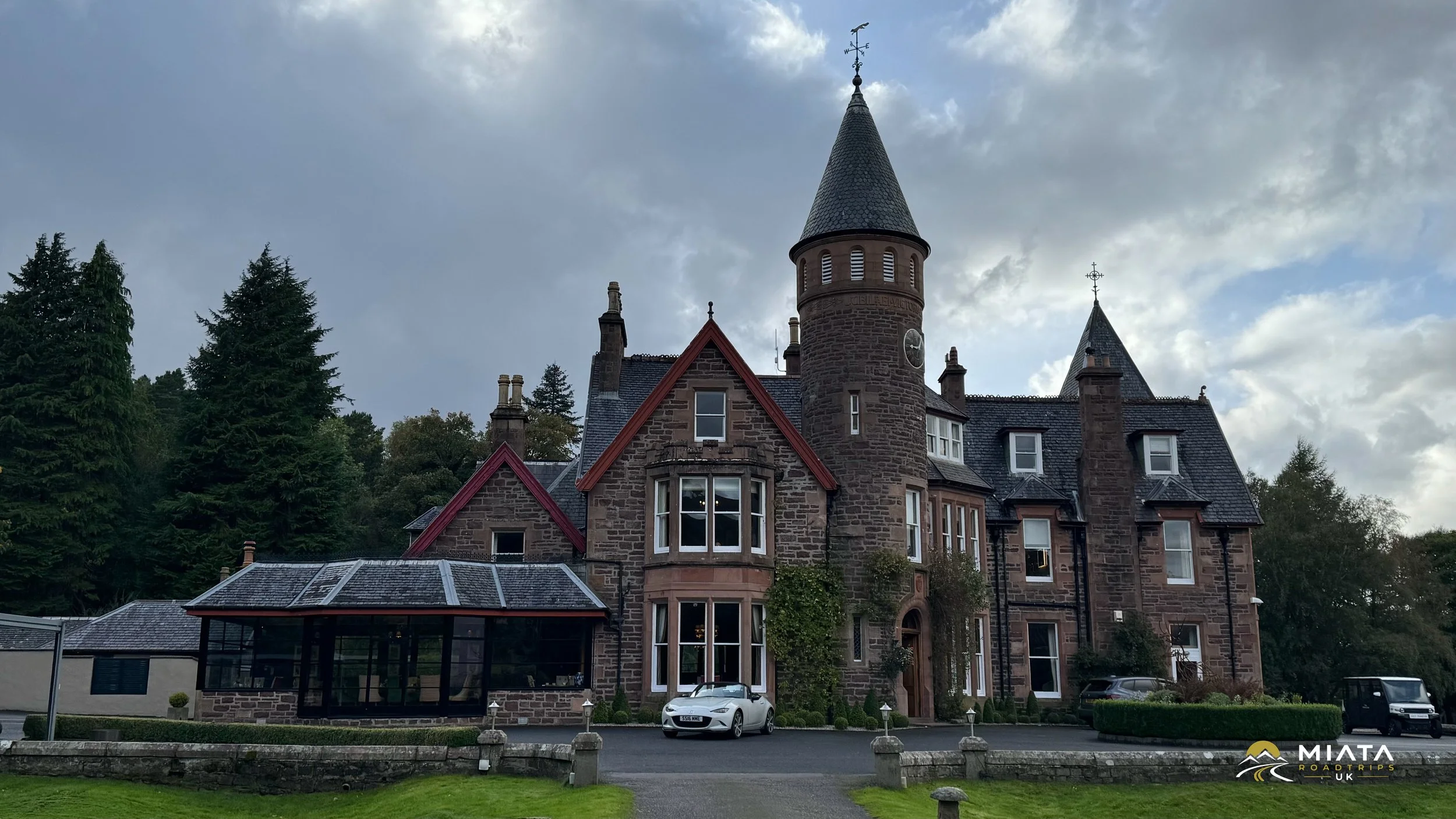
Then it was inland along the shores of Loch Maree, a long loch dotted with wooded islands, to Kinlochewe, a small village at its head, and west through Glen Torridon, with its huge mountains rising either side. With the sun out, this road was a joy, and every bend seemed to offer up another shot. This is what it feels like to be alive. I stopped at The Torridon, a grand Victorian shooting lodge turned luxury hotel at the head of Loch Torridon, for some photos and a bit of video.
From Torridon, I headed south to the foot of the big one, the Bealach na Bà. It's one of the steepest roads in Britain, climbing over 600 metres in a tangle of hairpins before dropping down to Applecross, a remote village on the coast looking out across the sea to Skye. In a little two-seater, it's like riding a rollercoaster you get to steer yourself.
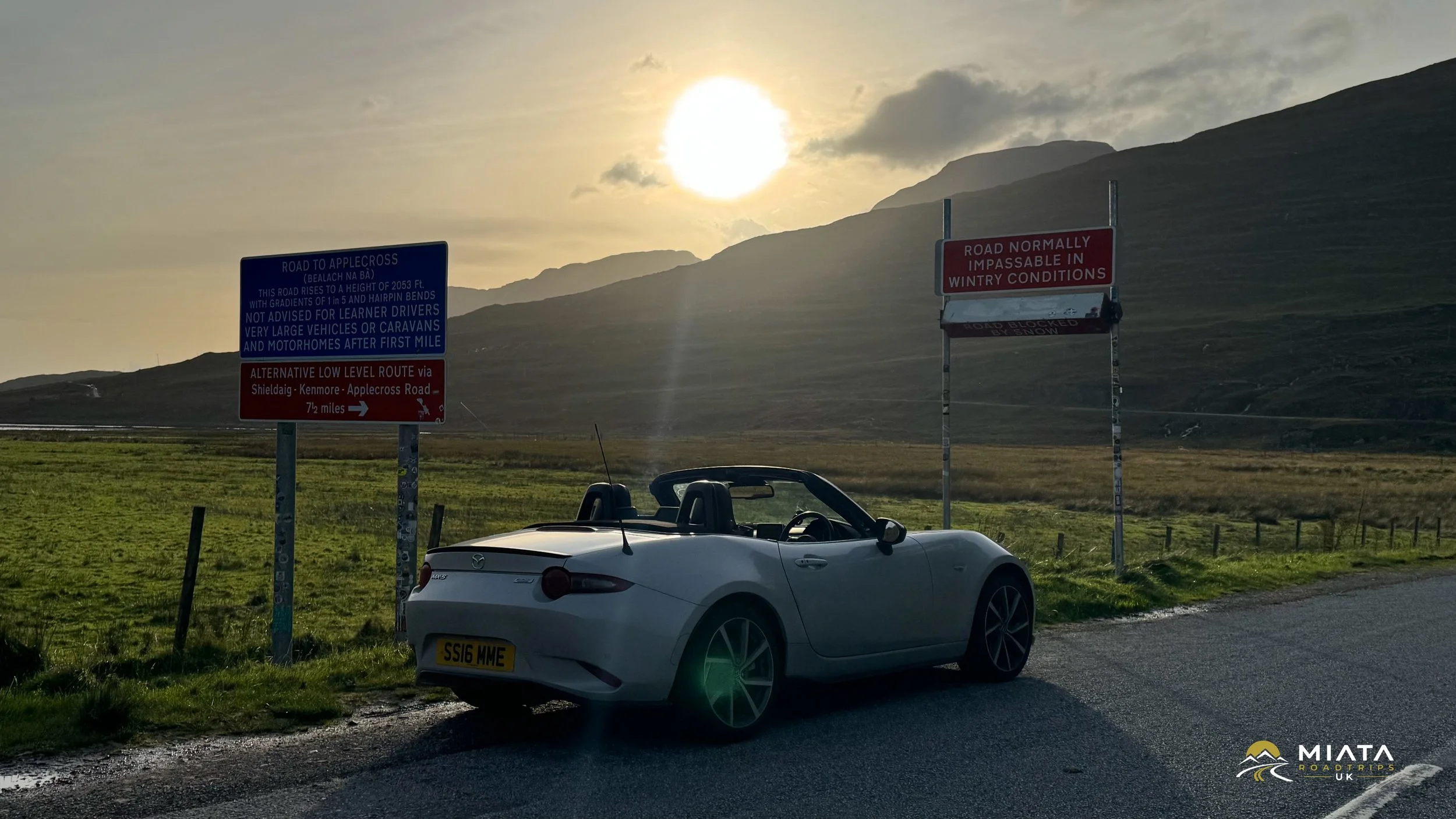
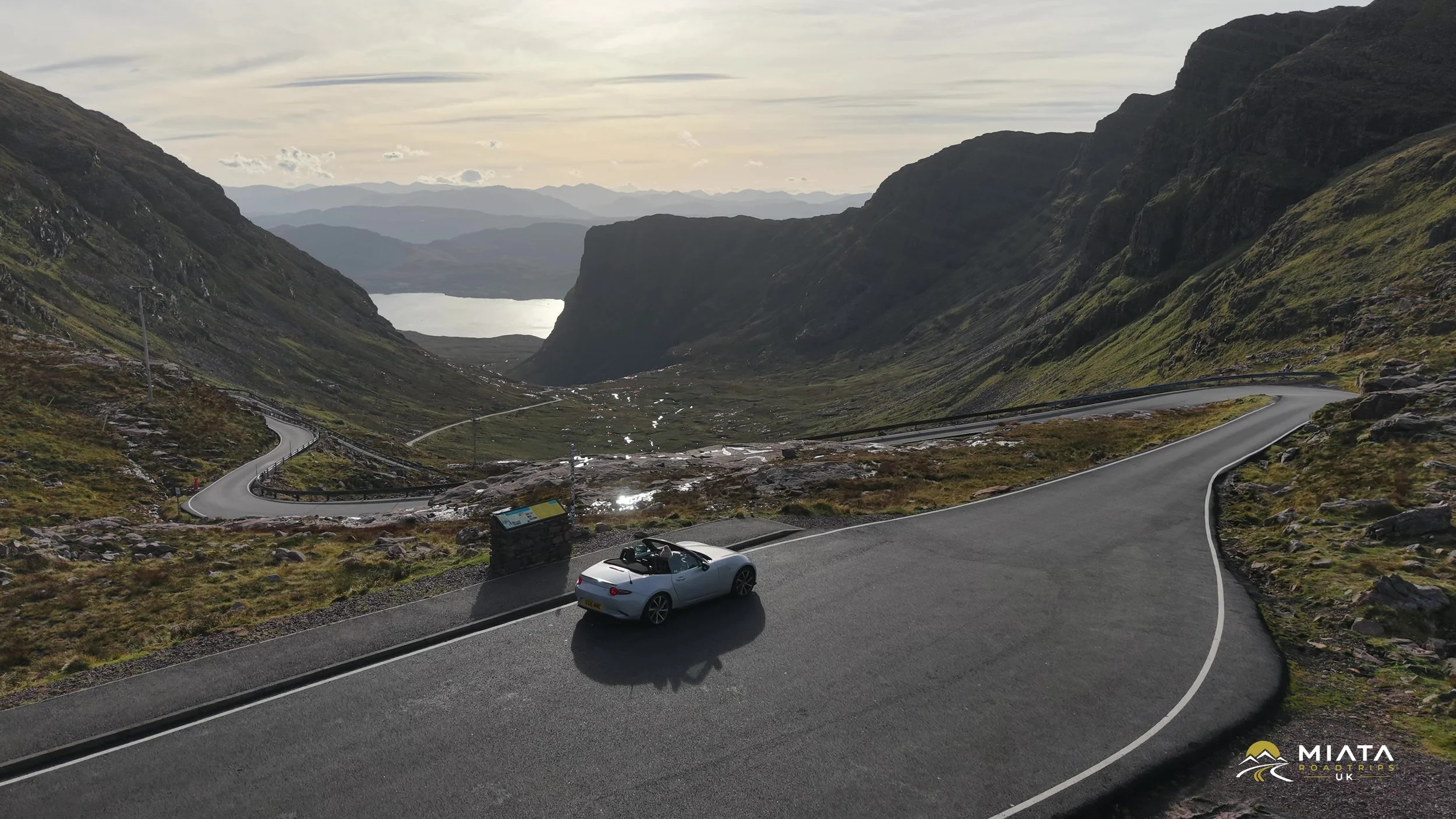
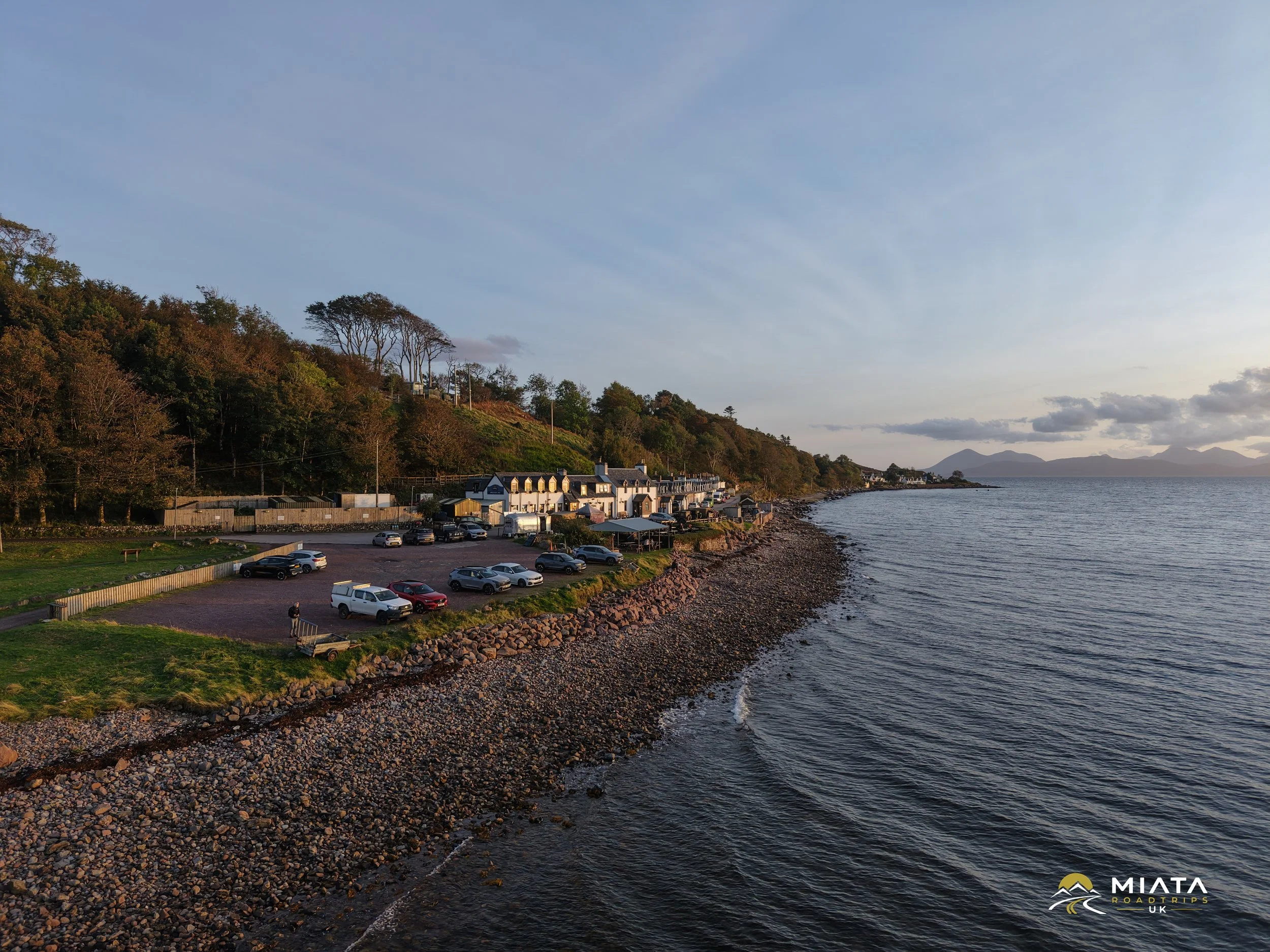
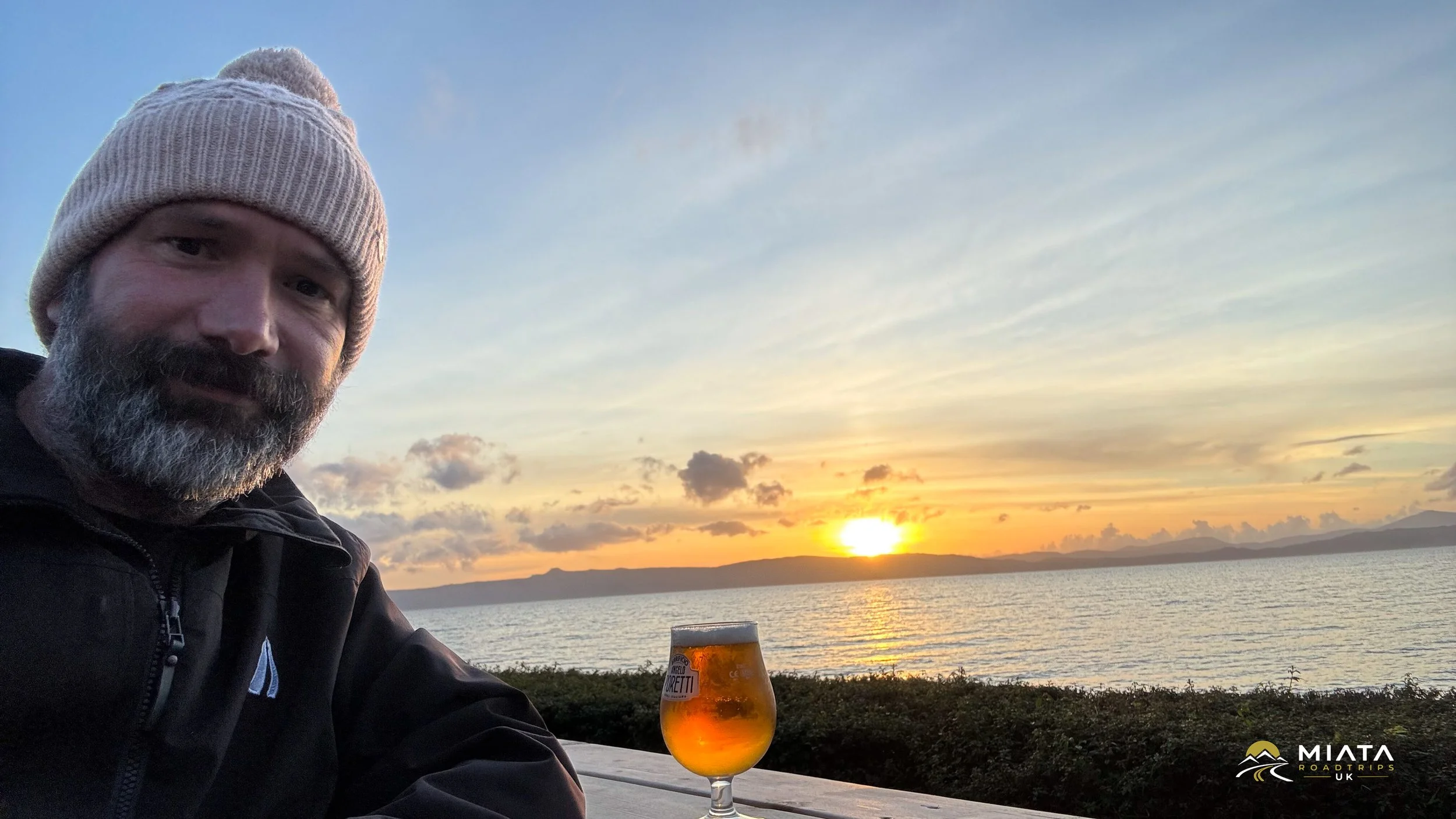
My bed for the night was a pod in Applecross, and dinner was at the Applecross Inn. For somewhere so remote, the atmosphere was cosy and buzzing, like a campfire everyone had found their way to. We were all travellers, from all walks of life, some from across the UK and others from all over the world, swapping stories over good food. Then we watched the sun go down over the sea towards Skye, the sky turning from gold to deep red. Later, I sat down with the owner, Judith Fish MBE, who has run the inn for 37 years and is now handing over the reins. She's not going far, just to a cottage around the corner. We shared a glass of whisky and toasted her success and her retirement. A perfect end to the day.
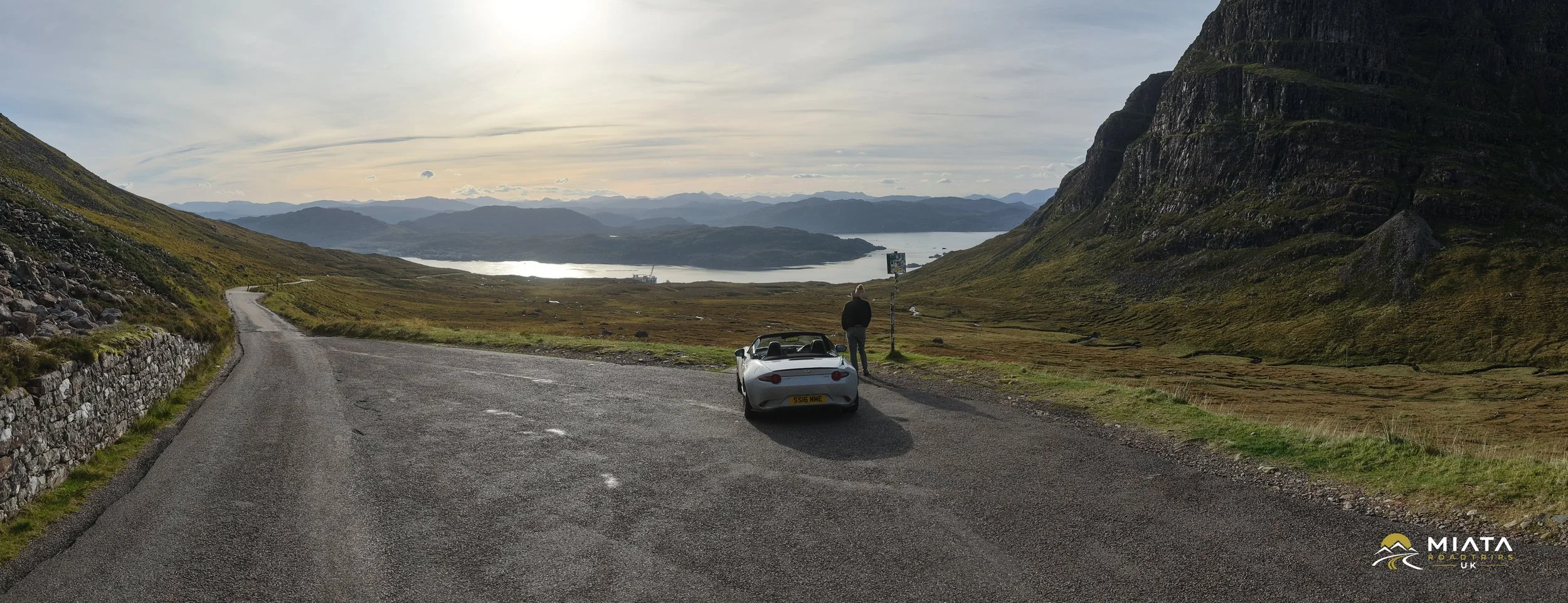
At the bottom of Bealach Na Ba
In Part Three, it's back down the Bealach na Bà and over the sea to Skye. Expect a castle on its own little island, a view back to the mainland that stopped me in my tracks, and a steam train with a whole hillside waiting for it. See you in Part Three.
Your Questions Answered
-
It's Dunnet Head, a short way west of John o' Groats on the NC500, where the cliffs drop away to the Pentland Firth and Orkney sits on the horizon. It's an RSPB nature reserve, home to puffins and other seabirds in summer, so leave the drone in the boot at the headland itself.
-
Early morning. The A9 runs north up the Caithness coast with the North Sea on your right, and with the sun still low, the light shimmers off the water. Laidhay Tea Rooms near Dunbeath makes a good breakfast stop along the way.
-
Is there a scenic detour off the north coast of the NC500?
-
Smoo Cave, a huge sea cave carved into the limestone cliffs, sits right by the village. Just outside, at Balnakeil, Cocoa Mountain serves a hot chocolate that's hard to beat, which is perfect for drying off after the cave.
-
Allow about 90 minutes. The easy path takes around 25 minutes, passing smaller waterfalls and crossing a suspension bridge over the main falls, which is limited to six people at a time. The car park fills up, so get there early whatever time of year you visit.
-
Yes, and it's great fun in a little two-seater. It's one of the steepest roads in Britain, climbing over 600 metres through a tangle of hairpins before dropping down to Applecross. The views out across the sea to Skye make it well worth it.
-
Absolutely. Rain brings waterfalls pouring off the mountains everywhere you look, and when the sun breaks through, it lights up the valleys. Low cloud around Tongue makes the landscape feel remote and wild.
-
The Applecross Inn is the heart of the village, with rooms, good food and a warm, buzzing atmosphere where travellers from all over swap stories. There's also a campsite nearby with pods, where you can hire a sleeping bag but will need to bring your own pillow. The sunsets over the sea towards Skye are a highlight.
-
Yes, it's worth checking them before you head into the emptier, more remote stretches. If a warning light comes on, it's better to turn back to the nearest town than push on, and the garage in Ullapool has an air machine.